Introduction
Rigging operations consistently rank among the most hazardous activities in construction, oil and gas, and manufacturing. According to BLS data, crane-related work deaths averaged 42 per year between 2011 and 2017, with private construction accounting for 43% of those fatalities. OSHA's own rulemaking for cranes and derricks estimated 89 crane-related construction fatalities annually before the final rule took effect.
Training gaps drive a significant share of those deaths. OSHA's Subpart CC directly ties crane and rigging safety to operator knowledge, qualification, and evaluation — not just equipment and procedures.
That's what this guide addresses. You'll find where to source free rigging safety training videos, how to build them into effective toolbox talks, and how to recognize when off-the-shelf content no longer meets your site's specific needs.
Key Takeaways
- BLS data shows crane-related fatalities averaged 42 per year from 2011–2017 — riggers, operators, and signal persons carry the highest risk
- OSHA 1926 Subpart CC requires documented competency for operators, signal persons, and qualified riggers
- Free videos from OSHA, ITI, and Mazzella supplement toolbox talks but don't substitute for standalone compliance documentation
- Keep toolbox talk videos to 5–10 minutes and follow up with discussion to reinforce retention
- Custom safety videos make sense when generic content doesn't match your equipment, site, or workflows
Why Rigging Safety Training Videos Matter
The Regulatory Stakes
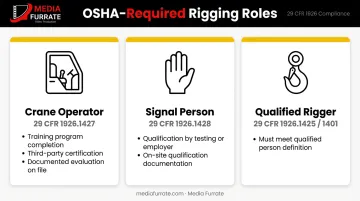
OSHA 1926 Subpart CC establishes specific training and qualification requirements for three key roles:
| Role | OSHA Citation | Key Requirement |
|---|---|---|
| Crane operator | 29 CFR 1926.1427 | Training, certification where applicable, documented evaluation |
| Signal person | 29 CFR 1926.1428 | Qualification assessment; documentation available on-site |
| Qualified rigger | 29 CFR 1926.1425 / 1926.1401 | Must meet OSHA's "qualified person" definition for covered fall-zone activities |
Under 29 CFR 1926.1430, employers must train covered employees and evaluate their understanding — with refresher training required whenever conduct or knowledge indicates a gap. There's no fixed calendar interval, but the standard doesn't allow for a "train once and forget it" approach.
Who Carries the Most Risk
Those training requirements exist for good reason. The people most exposed to crane and rigging hazards include:
- Riggers and signal persons working directly in the lift zone
- Crane operators responsible for load path and travel
- Anyone positioned near suspended loads during active operations
BLS data shows 79 cases from 2011–2017 where workers were struck by objects falling from or put in motion by a crane. Industries with the highest exposure — oil and gas, heavy construction, and manufacturing — are exactly the sectors where Louisiana and Gulf Coast facilities run active lifting operations daily.
Where Video Fits In
A meta-analysis covering 95 worker safety training studies and nearly 21,000 participants found that more engaging training methods — those requiring active participation — produced stronger knowledge and safety outcomes than passive delivery alone.
Don't over-rely on video, though. Watching a clip doesn't create a qualified rigger. Video paired with discussion, hands-on practice, and documented evaluation outperforms printed manuals or verbal instruction alone. For toolbox talks, a short video gives supervisors a consistent, visual starting point before connecting content to actual site conditions.
What to Look for in a Free Rigging Safety Training Video
Not all free content is worth playing to your crew. Before using any video in a formal training setting, check these four things:
1. Standards currency
- ASME's current sling standard is B30.9-2025; rigging hardware falls under B30.26-2026
- OSHA 1910.184 covers sling use in general industry; 1926.251 covers construction rigging equipment
- Skip any video that references prior editions without acknowledging the updates
2. Jurisdiction match
- Some free videos reference Canadian, European, or Australian standards — these don't align with OSHA or ASME requirements
- Check publication date and verify the regulatory citations shown on screen
3. Task specificity
- A video on wire rope inspection won't prepare your crew for a synthetic sling lift
- Match the video topic to the actual rigging method your team uses that day
4. Production clarity
- Group viewing requires adequate audio and visual quality
- If your crew can't see the sling angle being demonstrated or hear the narration in a noisy break room, the video loses its value
Awareness Video vs. Certification-Level Training
Free videos are generally appropriate for toolbox talk awareness — reinforcing habits, covering a single hazard, prompting discussion. They don't replace:
- Documented competency evaluation for crane operators
- Signal person qualification documentation
- Hands-on skills assessment required under Subpart CC
A video can support training when it's documented alongside a sign-in sheet, a post-discussion record, and a skills evaluation — not used as a standalone compliance checkbox.
Best Free Rigging Safety Training Video Resources
OSHA and Government Sources
- OSHA Video Library — Videos organized by topic; filter for crane, derrick, and hoist content. The OSHA Crane, Derrick and Hoist Safety overview page links to standards, eTools, and additional resources
- NIOSH/CPWR Crane Toolbox Talks — The 2022 NIOSH publication on crane stability and tipping follows a proven format: hazard explanation, real-life story, discussion questions, and recap — a structure worth replicating in your own sessions
- NIOSH Video Library — NIOSH produces worker safety videos for training and informational use, available publicly through CDC
Industry Training Channels
- Industrial Training International (ITI) YouTube — One of the most substantive free sources for rigging and crane content; covers fundamentals like load calculations, sling angles, and key personnel roles. Their course playlists include dedicated rigging series organized by topic
- Mazzella's Lifting & Rigging Channel — Their Rigging Basics playlist covers best practices and tutorials; verify individual video dates against current ASME editions before use
Manufacturer Resources
Equipment manufacturers publish free product-specific safety content that's particularly useful when training crews on specific hardware:
- Kito Crosby — Online training resources based on the Crosby User's Guide, covering rigging, chain slings, and cargo control
- Gunnebo Industries — Public video playlist covering lifting components and material handling equipment
YouTube Search Strategy
When sourcing clips for toolbox talks, specific search terms return far better results than broad queries:
- "rigging safety toolbox talk"
- "sling inspection training video"
- "crane hand signals training"
- "synthetic sling angle limits"
Before playing any clip to your crew, confirm the publication date and verify it references U.S. regulations — those two factors are the most common pitfalls with YouTube content.
How to Run an Effective Toolbox Talk Using a Rigging Safety Video
Choosing the Right Video for the Job
Match the video to the specific hazard your crew faces that shift. If the day involves synthetic sling lifts on an irregular load, a video on sling inspection and angle limits is directly useful. A general crane overview is not.
Keep toolbox talk videos to 5–10 minutes. Pre-shift settings aren't classrooms — attention and time are both limited. The National Safety Council's format for short safety content uses five-minute talks as a benchmark, and that benchmark translates well to field settings.
Running the Toolbox Talk Session
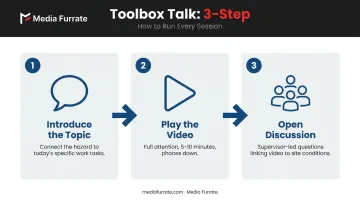
A simple three-part format works well:
- Introduce the topic — Connect it to today's work. "We're running a synthetic sling lift this morning, so we're covering angle limits and inspection criteria."
- Play the video — Enforce full attention for the full 5–10 minutes. Phones down, eyes on screen.
- Open discussion — Ask two or three questions that connect the video to your specific site conditions. "What do we do if someone spots wear on a sling during the pre-lift check?" Supervisors should drive this conversation, not read from a script.
Documentation and Topic Rotation
OSHA Subpart CC doesn't specifically require sign-in sheets for toolbox talks. That said, keeping attendance records and noting the topic covered is sound practice for any compliance audit or incident investigation. Sign-in sheets or a simple digital log both work.
Rotate topics across sessions rather than replaying the same video. A quarterly rotation covering these areas ensures broad hazard coverage:
- Sling care and inspection
- Load securement
- Crane hand signals
- Pre-lift planning
- Working near suspended loads
- Personal protective equipment for rigging work
When Free Videos Aren't Enough: Custom Rigging Safety Training Videos
Generic content has a ceiling. A video produced for a general audience won't show your specific crane model, your facility's load paths, or the rigging hardware your crew uses every day. That disconnect is where training stops working.
Custom-produced safety training videos make the most sense when:
- Onboarding new crews who need to learn your facility's specific procedures, not generic ones
- Documenting facility-specific workflows for compliance audits or insurance reviews
- Introducing new equipment or rigging methods where existing generic content doesn't apply
- Operating in environments where site layout, hazard profiles, or regulatory requirements differ from standard scenarios
Media Furrate produces industrial safety and training videos for companies across the Southeastern United States, including safety orientation work for oil and gas clients like Crescent Midstream. Their process covers scriptwriting, legal team coordination, shooting on active industrial sites, and final editing. Safety managers handle compliance — Media Furrate handles production.
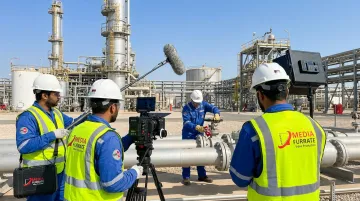
The LEAN production model keeps crews small and costs manageable while maintaining full-service scope — writing, shooting, and editing under one roof. For companies in Louisiana, Texas, or elsewhere in the Gulf South that need purpose-built rigging safety content rather than off-the-shelf clips, on-location production from an experienced industrial team is a practical option.
Frequently Asked Questions
What topics should rigging safety training videos cover?
Core topics include sling inspection and selection, load weight and working load limits, sling angles and their effect on capacity, crane hand signals, pre-lift planning, and safe behavior near suspended loads. Equipment-specific content — such as wire rope vs. synthetic sling differences — helps workers apply concepts to the actual gear they handle on the job.
Are free rigging safety training videos OSHA-compliant?
Free videos can support training, but they don't satisfy OSHA compliance on their own. Subpart CC requires documented evaluation for crane operators, on-site qualification documentation for signal persons, and demonstrated competency — none of which video alone satisfies.
How long should a toolbox talk video be?
5–10 minutes is the effective range for pre-shift settings. Longer content risks losing attention before the follow-up discussion even starts — and that discussion is where retention is built.
How often should rigging safety training be conducted?
OSHA requires training whenever a worker lacks the skills to perform rigging safely, and refresher training whenever conduct or evaluation indicates a need. Most programs also run weekly or monthly toolbox talks alongside formal training to maintain consistent hazard awareness.
What is the difference between a toolbox talk and formal rigging training?
A toolbox talk is a brief, informal refresher — typically 10–20 minutes, covering one topic. Formal rigging training is structured, documented, and may include written or practical testing. Under Subpart CC, only the latter satisfies documented competency requirements for operators and signal persons.
Can a company produce its own rigging safety training videos?
Yes — and for facility-specific procedures, custom videos are often more effective than generic alternatives. A production partner like Media Furrate can build content around your actual equipment, site conditions, and workflows — making it more useful for both training and compliance documentation.