For safety managers and supervisors in high-heat industries — construction, oil and gas, manufacturing, outdoor industrial work across the Gulf Coast — finding reliable training materials fast is a real operational need.
This guide covers what good heat stress training videos should include, where to find free options from trusted sources, and when a generic video won't cut it for your specific worksite.
TL;DR: What You'll Find in This Guide
- Free heat stress videos are available from OSHA, NIOSH, WeeklySafety, and state labor departments
- Check free videos against OSHA's training topics before showing them to your crew
- Videos in the 7–12 minute range hit the sweet spot for toolbox talks and pre-shift meetings
- Generic free videos cover fundamentals but miss your site-specific PPE, layout, and procedures
- High-risk sites — refineries, petrochemical plants, Gulf Coast outdoor work — often require custom-produced safety training
Why Heat Stress Training Videos Work
Workers retain safety information better when they can see it in action. Video connects symptoms, environments, and correct responses in ways a printed bulletin or verbal briefing simply can't replicate.
A peer-reviewed construction hazard-recognition study found that workers failed to identify more than 40% of hazards shown in case images. That's a recognition gap that video-based training — especially when paired with brief discussion — directly addresses.
That finding points directly to format. Short safety videos fit the pre-shift toolbox talk naturally — attention is limited at the start of a shift, and a 7–10 minute video followed by a two-minute discussion is realistic. A 45-minute slide deck is not.
Heat illness is preventable, but prevention depends on recognition. OSHA's core guidance covers:
- Drinking water frequently — before thirst sets in
- Taking rest breaks in shaded or cooled areas
- Identifying early warning signs like dizziness, nausea, and heavy sweating
Workers can't act on that guidance if they don't know what to watch for. That's what training addresses.
What Every Heat Stress Training Video Should Cover
OSHA's heat training page outlines the specific topics every supervisor and worker must cover. Before using any free video, check it against these requirements.
Types of Heat-Related Illness and Warning Signs
Training should cover the full spectrum — heat cramps, heat syncope, heat exhaustion, and heat stroke — with emphasis on recognizing early symptoms before they escalate.
Key symptoms to include:
- Heat exhaustion: heavy sweating, nausea, dizziness, weakness, elevated body temperature
- Heat stroke: confusion, slurred speech, loss of consciousness, very high body temperature, hot or dry skin — a medical emergency requiring immediate 911 response
Acclimatization for New and Returning Workers
OSHA specifically calls out new and unacclimatized workers as the highest-risk group. NIOSH's guidelines are specific:
- New workers: Begin at no more than 20% of typical heat exposure on day 1, increasing by 20% each day
- Returning experienced workers: Start at 50% and reach full exposure by day 4
- Supervision window: Monitor new employees closely for the first 14 days
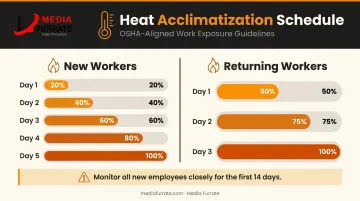
A training video that skips acclimatization leaves your highest-risk workers unprotected.
Hydration and Fluid Replacement
"Drink water" isn't specific enough. Training should communicate:
- 1 cup (8 oz.) of water every 15–20 minutes during moderate activity in heat
- No more than 48 oz. per hour — overhydration carries its own risks
- Avoid alcohol and excess caffeine, which accelerate dehydration
Work/Rest Cycles and Cool Rest Areas
Videos should address how rest-break frequency and duration should increase as heat index rises. OSHA's heat-index categories provide practical guidance:
| Heat Index | Risk Level | Recommended Action |
|---|---|---|
| 80–90°F | Caution | Monitor workers; encourage water breaks |
| 91–103°F | Extreme Caution | Increase rest frequency; limit exertion |
| 103–124°F | Danger | Reduce outdoor work; enforce shade breaks |
| 126°F+ | Extreme Danger | Suspend non-essential outdoor activities |
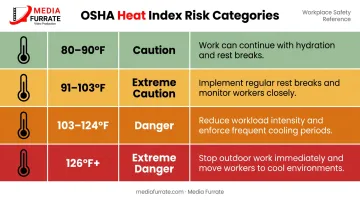
Rest areas matter too — shade or air-conditioned spaces, not just any break area.
First Aid and Emergency Response
Workers need to know exactly what to do when a coworker shows symptoms — and the response differs depending on severity. Training should cover:
- Move the worker to a cool, shaded area immediately
- Remove unnecessary clothing; apply cold compresses to head, face, and neck
- For heat stroke symptoms (confusion, loss of consciousness, hot dry skin) — call 911 immediately, do not wait to see if conditions improve
Top Free Heat Stress Safety Training Video Resources
Quality and depth vary across free options. Use the OSHA checklist above to assess which videos match your team's needs before running a training session.
OSHA Heat Illness Prevention Resources
OSHA's heat exposure page is the authoritative starting point. It links to training materials, hazard recognition guides, and the Water. Rest. Shade. campaign content — all free to use in safety meetings. OSHA also maintains a dedicated training page for supervisors and workers with downloadable guides.
YouTube Safety Channels
Channels like WeeklySafety on YouTube offer short (7–10 minute), professionally structured heat stress videos covering warning signs, first aid, and prevention strategies. No sign-in required, no paywall. WeeklySafety's summer safety collection includes five short videos on hot-weather topics that work well for toolbox talks. Search YouTube for "heat stress toolbox talk" to find additional options.
NIOSH and CDC Training Materials
For official agency materials, NIOSH offers free heat stress resources that go beyond YouTube content. Two worth bookmarking:
- PDF training guide — Keeping Cool: Training to Reduce Heat Stress Incidents works well as a companion document to video-based meetings
- OSHA-NIOSH Heat Safety Tool app — provides real-time heat index readings and protective recommendations, useful to reference at the start of any hot-weather shift
State OSHA and Labor Department Resources
Several states with high heat exposure have developed their own free training materials:
- Texas: The Texas Department of Insurance offers a free Heat Stress Safety Training Program in English and Spanish
- Louisiana: The Louisiana Department of Health offers region-specific heat illness prevention resources tailored for Louisiana employers
- California: Cal/OSHA publishes extensive heat illness prevention guidance, including an indoor heat standard effective July 2024
Search your state labor department's website for localized materials — they often reflect regional conditions more accurately than federal resources on their own.
How to Run a Heat Stress Safety Meeting Using Free Videos
A three-step structure works consistently for pre-shift toolbox talks:
- Play the video — keep it to 7–12 minutes; anything longer loses the room
- Facilitate a 2–3 minute discussion — focus on one or two takeaways directly relevant to that day's worksite conditions (check the heat index forecast beforehand)
- Confirm emergency response steps — verify that workers know the location of the cool rest area, water stations, and who to contact if someone shows symptoms
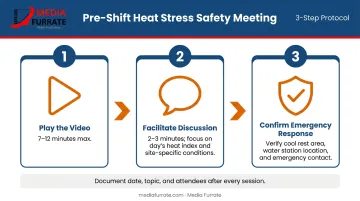
The meeting structure only works if it connects to the actual job site. After watching, point to the real water station, walk workers to the shade structure, or pull up the day's heat index on the OSHA-NIOSH app. Tying the video to the physical environment significantly improves retention.
Before wrapping up, make sure you document the session:
- Record the date, video topic, and names of attendees
- OSHA doesn't currently require heat-specific records for all industries, but documentation supports General Duty Clause compliance
- Written records provide evidence of due diligence if an incident occurs
When Free Videos Aren't Enough
Generic training videos do a solid job covering universal concepts — symptoms, hydration, acclimatization. What they can't do is show your worksite.
A refinery worker watching a video filmed on a generic construction site doesn't see their PPE, their equipment, or their specific work/rest protocol. That disconnect reduces the training's effectiveness, particularly for hazard recognition.
Industries with complex heat exposure environments — oil and gas, petrochemical facilities, outdoor construction in Gulf Coast climates — often have worksite-specific factors that generic videos simply can't address:
- Required PPE that increases heat load (impermeable suits, certain respirators)
- Site-specific cooling stations and emergency response procedures
- Equipment-specific risks unique to the facility
This is where custom-produced safety training videos make a measurable difference. Workers recognize their own environment, equipment, and colleagues on screen, which improves engagement and retention.
Media Furrate has produced safety orientation videos for industrial clients across Louisiana and the Southeast, including work for companies like Crescent Midstream. Safety orientation is Media Furrate's most common industrial production. The process includes full script writing and coordination with legal teams to ensure accuracy and compliance, delivered as a complete turnkey package from concept through final edit.
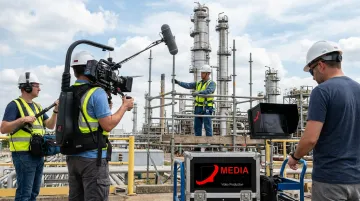
The LEAN production model keeps crew sizes small and costs controlled. A purpose-built video can serve onboarding, annual refreshers, and OSHA documentation for years — a durable investment that pays off well beyond the initial production.
Reach out to Media Furrate at (225) 317-4233 or jason@mediafurrate.com for a free consultation on what a custom safety training video would involve for your facility.
Frequently Asked Questions
Are employers legally required to provide heat stress training?
OSHA does not yet have a finalized federal heat illness standard, though a proposed rule published in August 2024 is currently in rulemaking. Under the General Duty Clause, employers must provide a workplace free from recognized hazards — and OSHA identifies heat as exactly that. Training is a practical compliance necessity now, not a future obligation.
How often should heat stress training be conducted?
At minimum, conduct training at the start of warm season and whenever new workers join. Brief refresher talks are recommended throughout summer months, particularly before extreme heat events or when conditions exceed the "Extreme Caution" threshold.
What topics should a heat stress training video cover?
An OSHA-aligned video should cover:
- Types of heat illness and warning signs
- Acclimatization requirements for new workers
- Specific hydration guidelines
- Work/rest cycles tied to heat index levels
- Emergency first aid response, including when to call 911
Can free YouTube videos satisfy OSHA training requirements?
Yes, when the content covers required topics and aligns with your specific workplace conditions. Keep attendance records to demonstrate training was conducted — documentation is what makes free resources defensible during an inspection.
What is the difference between heat exhaustion and heat stroke?
Heat exhaustion involves heavy sweating, weakness, nausea, and dizziness — all treatable with rest, hydration, and cooling. Heat stroke involves confusion, altered mental status, possible loss of consciousness, and dangerously high body temperature. Heat stroke is a life-threatening emergency requiring immediate 911 response.
How long should a heat stress safety training video be?
For toolbox talks and pre-shift meetings, 7–12 minutes is the practical range. That gives you enough time to cover the material without losing a crew that's ready to get to work.